A Practical, Evidence-based Update for Healthcare Professionals
Pregnancy is a unique window of increased vulnerability to certain infectious diseases for both the pregnant woman and the foetus/newborn. Vaccination in pregnancy not only protects the pregnant woman but also provides passive immunity to the infant in the early months of life when their immune system is immature.
In the UK, routine maternal immunisation is supported by national guidance, including national immunisation policy and clinical practice frameworks, underpinned by safety data and clinical effectiveness evidence. As clinicians and immunisers, understanding what vaccines are recommended, when to offer them, and how they protect both mother and baby is essential.
Why Vaccinate in Pregnancy?
Physiological changes in pregnancy, including immunomodulation and cardiopulmonary adaptations, increase the risk of severe outcomes from some infections. Vaccines given during pregnancy induce maternal antibody responses that cross the placenta, providing early protection to infants before they receive their own vaccinations under the routine childhood schedule. (nhs.uk)
Routine Vaccinations Recommended During Pregnancy
Healthcare professionals should ensure that pregnant women are routinely offered the following vaccines in line with UKHSA policy recommendations.
Seasonal Influenza (Flu) Vaccine
- Why: Pregnant women are at higher risk of complications from influenza, such as pneumonia and hospitalisation; infection can also impact foetal outcomes.
- Timing: Offered at any stage of pregnancy, optimally during the autumn/winter flu season.
- Key Point: This is an inactivated vaccine and can be given at the same time as pertussis vaccination and RSV vaccine in pregnancy.
- Clinical Impact: Maternal flu vaccination reduces influenza in mothers and provides some protection to infants in first few months of life. (nhs.uk)
Pertussis (Whooping Cough) Vaccine
- Why: Pertussis can be profoundly severe and sometimes fatal in young infants. Maternal vaccination transfers protective antibodies across the placenta to the foetus
- Timing: Ideally offered between 16–32 weeks’ gestation (often around 20 weeks) but can be offered up to delivery and in the 8 weeks after birth if the mother was not vaccinated in pregnancy.
- Key point: Regardless of prior immunisations, it should be offered in every pregnancy.
- Clinical Evidence: Vaccination between 16 and 32 weeks maximises placental antibody transfer to the newborn. (GOV.UK)
Respiratory Syncytial Virus (RSV) Vaccine
- Why: RSV is a common respiratory pathogen that can cause severe lower respiratory tract illness (including bronchiolitis) in early infancy.
- Timing: Offered from around 28 weeks’ gestation to maximise transfer of protective antibodies; effectiveness persists into early months of life.
- Key point: Regardless of prior immunisations, it should be offered in every pregnancy and is a year-round vaccination programme.
- Clinical Evidence: Vaccination between 28 – 36 weeks maximises placental antibody transfer to the newborn.
Vaccines Not Routinely Advised During Pregnancy
Live attenuated vaccines for example, MMR (measles, mumps, rubella) and varicella are typically not recommended during pregnancy due to theoretical infection risk to the foetus. These are generally deferred until postpartum (nhs.uk). All women should have been offered 2 MMR vaccines prior to planning a pregnancy.
Vaccine Safety and Evidence Base
- All vaccines routinely recommended in pregnancy in the UK are inactive or non-live formulations.
- Safety data from both clinical trials and post-licensure surveillance demonstrate no increase in adverse pregnancy or neonatal outcomes with influenza, pertussis, and RSV vaccines.
- The Vaccine Knowledge Project and NHS resources provide detailed discussions on the immunogenicity, safety, and clinical rationale supporting maternal vaccination (Vaccine Knowledge).
Practical Considerations for Healthcare Teams
Discussion and Consent
- Address vaccine hesitancy proactively by discussing risk of infection, benefits of maternal and infant immunity, and established safety evidence.
- Provide tailored information according to stage of pregnancy and any underlying health conditions.
Integration Into Antenatal Care
- Encourage midwives, GPs and immunisation teams to incorporate vaccine offers early in antenatal pathways.
- Ensure clear documentation and follow-up reminders where needed (e.g., clinic lists highlighting pertussis eligibility between 16–32 weeks).
Coordination With Routine Immunisation Schedules
- Maternal vaccines support childhood immunisation schedules; effective maternal vaccination reduces early infant disease burden before routine vaccinations begin.
Conclusion
Maternal vaccination is a cornerstone of preventive healthcare in pregnancy. Offering influenza, pertussis, and RSV vaccines at the appropriate gestational windows supports dual protection, safeguarding the pregnant individual and providing passive neonatal immunity. Staying current with immunisation policy updates and maintaining clear clinical communication with pregnant people are key to optimising uptake and outcomes.
Resources to support maternal vaccinations
NHS Vaccinations: Vaccinations in pregnancy
NHS Vaccinations: Vaccinations in pregnancy
https://www.nhs.uk/pregnancy/keeping-well/vaccinations
Find out about vaccination for pregnant women, why they’re important and how to get them
Vaccination and pregnancy – Oxford Vaccine Group – Vaccine Knowledge
Vaccination and pregnancy
https://vaccineknowledge.ox.ac.uk/vaccines-in-pregnancy#Which-vaccines-should-I-get-if-I-am-pregnant
Source of independent, evidence based information about vaccines and infectious diseases.
Vaccines in Pregnancy website
Vaccine facts for expectant parents and healthcare professionals in the UK.
Resources available from the Public Health resources website
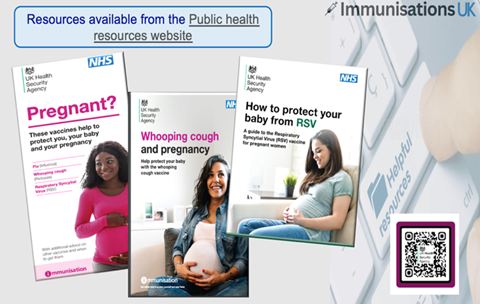
Resources available from the Public Health resources website
https://www.gov.uk/guidance/find-public-health-resources
The newly launched website hosts many patient resources including leaflets, posters and videos in different languages and formats.
Vaccine Update Newsletter – special edition
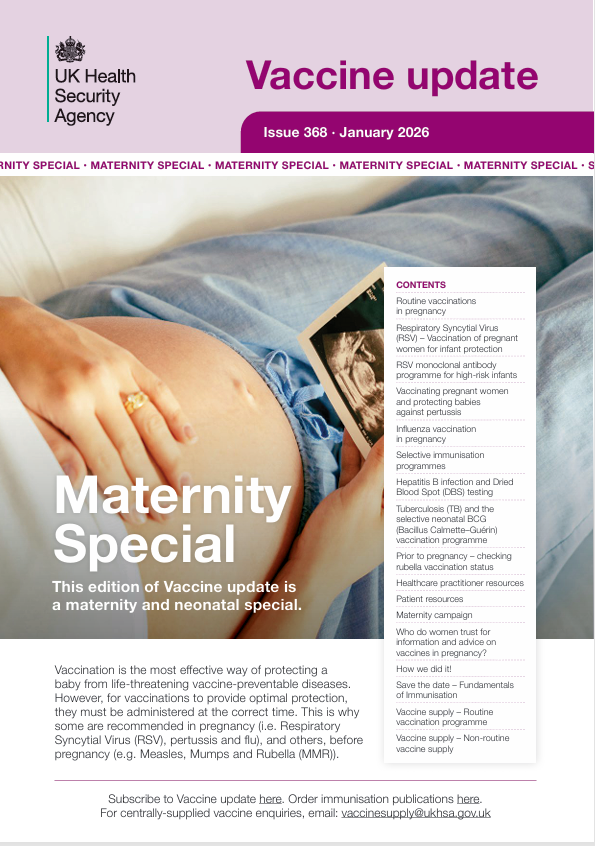
Vaccine update: issue 368 January 2026. Maternity special edition
https://www.gov.uk/government/collections/vaccine-update
This edition of vaccine update contains an overview of eligibility, information about the RSV, pertussis and flu vaccination programmes, vaccine coverage and links to some healthcare resources that can help guide practitioners and answer questions.