
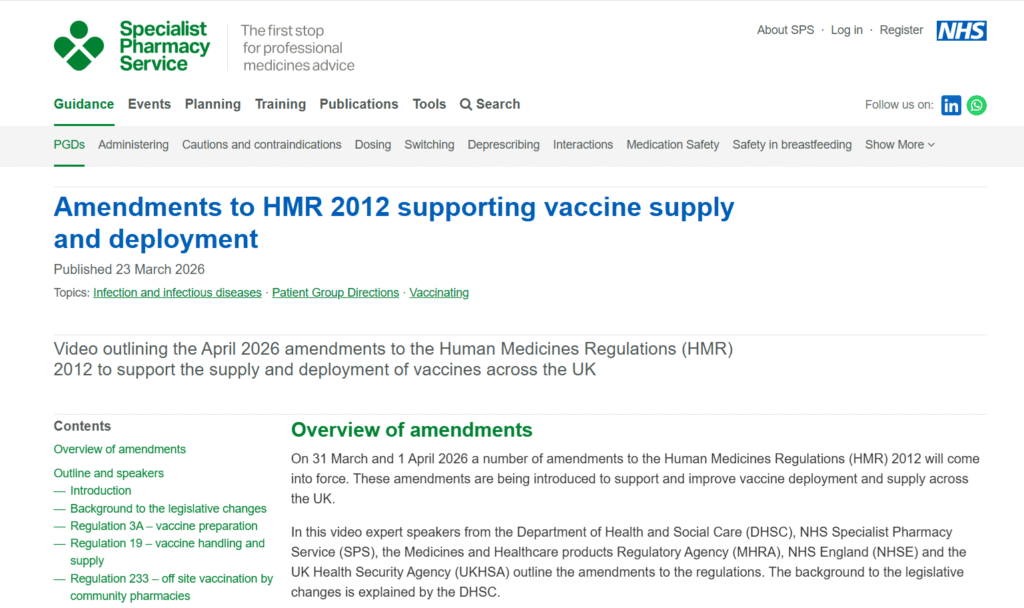
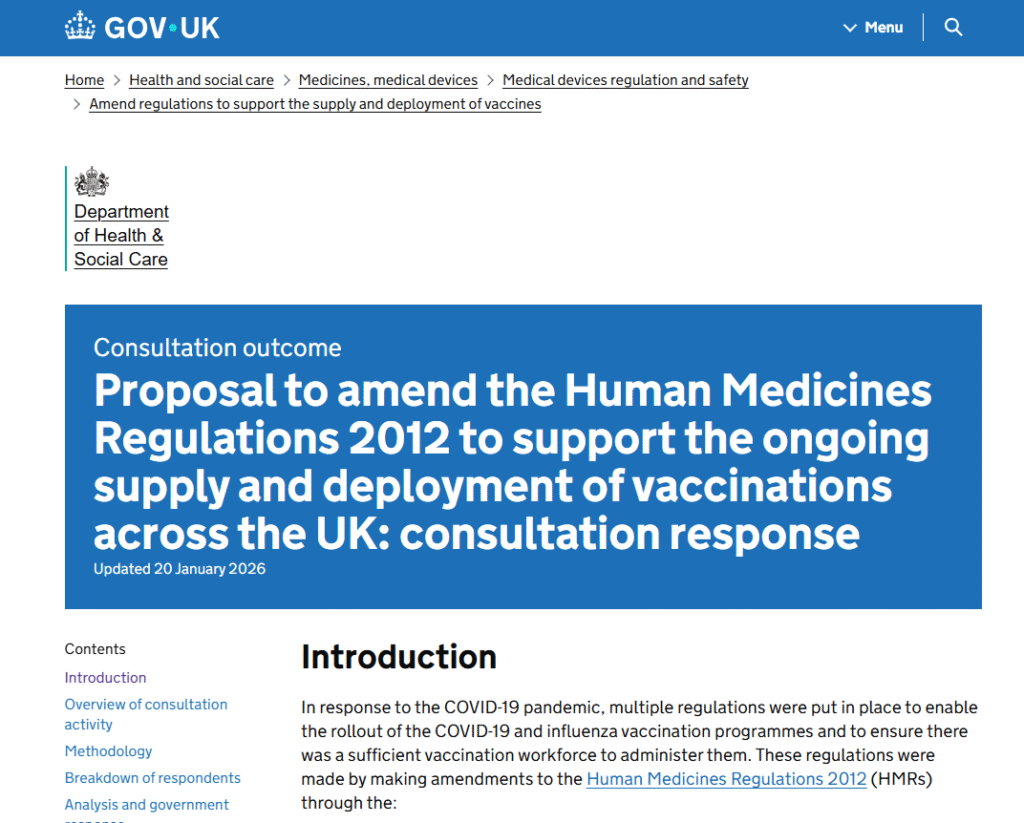
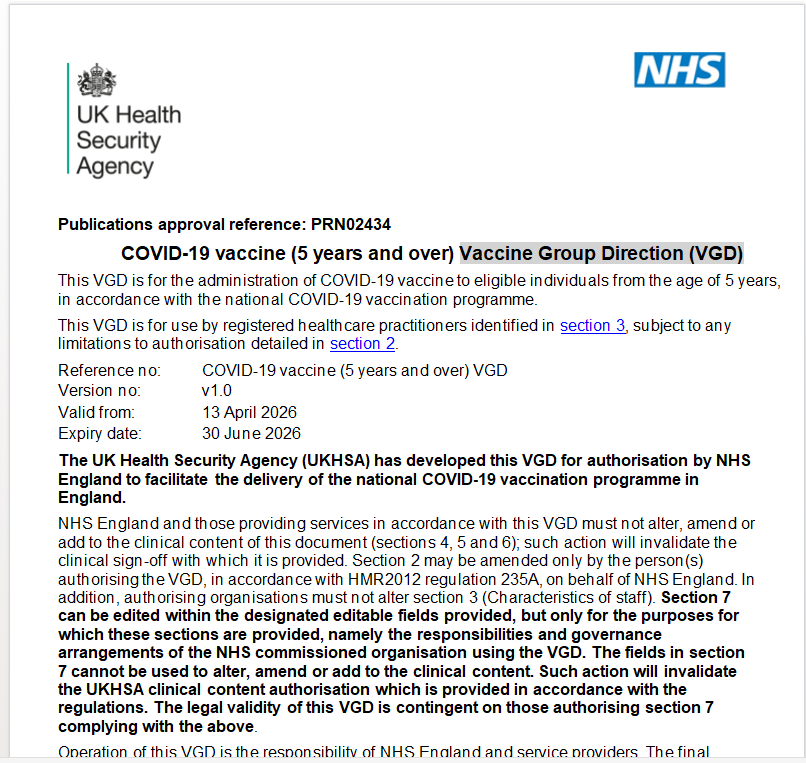
The legal framework for vaccine delivery across the UK has changed. Following updates to the Human Medicines Regulations (HMR) 2012, Vaccine Group Directions (VGDs) have been introduced, replacing the temporary National Protocols used during the COVID-19 pandemic.
This blog outlines what VGDs are, what has changed, and how they sit alongside other legal mechanisms such as Patient Group Directions (PGDs) and written instructions in occupational health.
Why the Change?
National Protocols (Regulation 247A) enabled rapid workforce expansion during the pandemic but were always intended as a temporary measure.
From 1 April 2026:
- Regulation 247A lapsed
- Regulation 235A introduced VGDs as a permanent mechanism for vaccination delivery (Gov.uk)
VGDs build on lessons learned during COVID-19 and flu programmes, providing a more structured and sustainable approach.
What is a Vaccine Group Direction (VGD)?
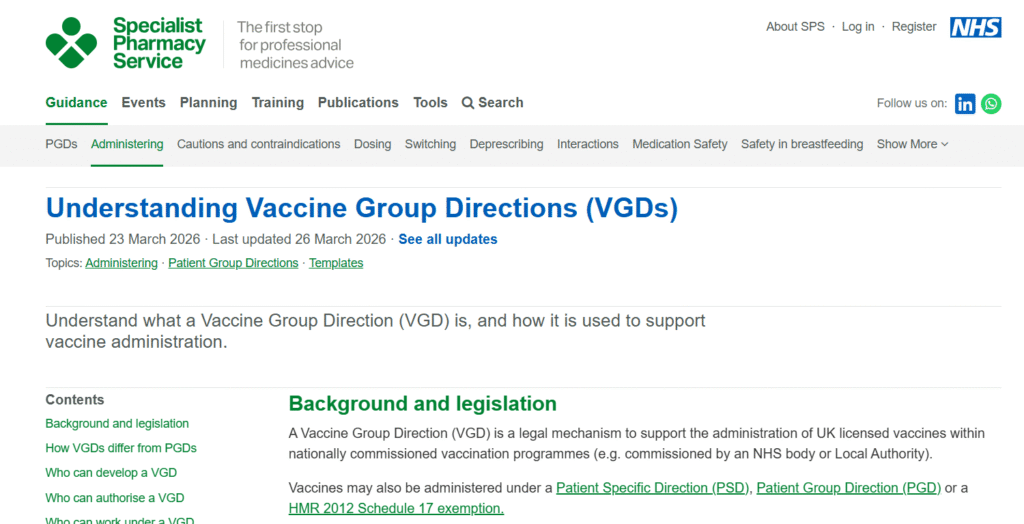
A Vaccine Group Direction (VGD) is a legal mechanism allowing the supply and administration of vaccines without an individual prescription within nationally commissioned programmes (SPS).
Key features:
- Applies to UK-licensed vaccines
- Enables registered healthcare professionals (RHCPs) to assess and vaccinate patients
- Supports large-scale delivery with appropriate clinical governance
Key Changes You Need to Know
1. National Protocols Have Ended
- Regulation 247A (COVID-19 and flu National Protocols) ended on 1 April 2026
- Replaced by Regulation 235A: VGDs
2. Clinical Assessment Remains with Registered Professionals
Under VGDs:
Only registered healthcare professionals can:
- Assess patient suitability
- Obtain informed consent
This mirrors the PGD model, ensuring clinical decision-making remains with appropriately qualified staff.
3. Delegation is Built In, but Controlled
VGDs allow the assessing RHCP to delegate certain tasks, including:
- Vaccine administration
- Documentation and record keeping
However:
- Delegation must be to a trained and competent individual
- The delegating RHCP retains overall responsibility
4. Supervision is Mandatory
- The RHCP must be on-site and available at all times
- Delegated staff work under their supervision
5. Key Practical Differences from National Protocols
There are some important differences between National Protocols and VGDs that will impact how clinics are run:
- Preparation of vaccines (reconstitution and dilution)
- Can no longer be delegated separately
- Must be carried out by the same person administering the vaccine
- Who can assess and obtain consent
- Only those registered healthcare professionals eligible to work under a PGD can do this under a VGD
- This means some roles (e.g. doctors and nursing associates) may not be able to undertake this function under a VGD
- Alternative legal mechanisms such as a Patient Specific Direction (PSD) may be used where appropriate
- Who can provide clinical supervision
- Supervision of non-registered staff must be undertaken by the same group of professionals who can assess and consent under a PGD
- This may affect how clinics are staffed and led in practice
- Reduced administrative burden in some cases
- VGDs remove the need for a PSD for each individual patient when using non-registered staff
- This has the potential to save significant time, depending on how services are structured
👉 These differences mean services may need to review workforce models and clinic processes when transitioning to VGDs.
How Do VGDs Fit with Other Legal Mechanisms?
Vaccination can be delivered under several frameworks depending on the setting:
VGDs (Regulation 235A)
- Used for national vaccination programmes
- Allow assessment + delegation under supervision
PGDs (Patient Group Directions)
- Established framework for group-based care
- No delegation of clinical assessment
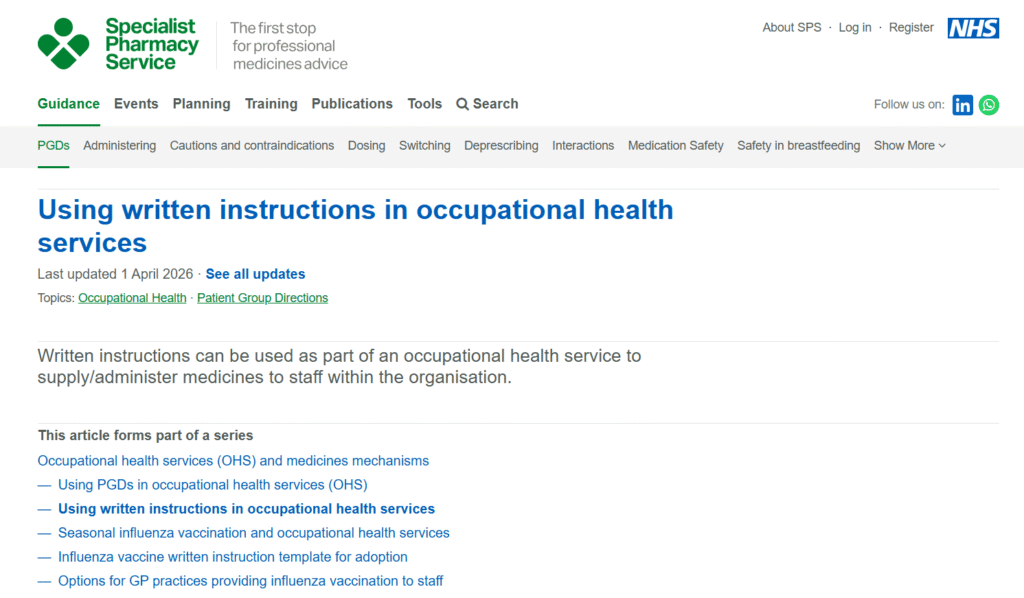
Written Instructions (Occupational Health Services)
In occupational health:
- Vaccines can be administered under a written instruction signed by a doctor
- Delivered by trained occupational health staff (SPS)
Used primarily for:
- Staff vaccination programmes
What Does This Mean for Healthcare Staff?
VGDs introduce a hybrid model:
- Clinical oversight (like PGDs)
- Workforce flexibility (like National Protocols)
For teams, this means:
- Clearer roles and accountability
- Continued use of mixed skill workforce models
- Strong focus on:
- Training and competency
- Supervision
- Governance
Key Takeaways
- National Protocols have ended and been replaced by VGDs (Regulation 235A)
- Only registered healthcare professionals can assess and obtain consent
- Delegation is permitted, but with strict supervision requirements
- The RHCP must remain on-site and accountable
- Preparation of vaccines cannot be split between staff
- VGDs may reduce administrative burden in some settings
- Other mechanisms (PGDs, PSDs, written instructions) still apply depending on context
Final Thoughts
The move to VGDs marks a transition from emergency pandemic measures to a long-term, sustainable model for vaccine delivery.
Understanding the practical differences, especially around delegation, supervision, and workforce roles, will be essential for safe and effective implementation.
references:
We hope you have found this blog useful, for more information or to discuss legal governance further, why not join one of our immunisation training updates.
Go to “Book a course” tab for training dates and to book online.