The NHS Respiratory Syncytial Virus (RSV) vaccination programme for older adults is entering a significant new phase in 2026. Following advice from the Joint Committee on Vaccination and Immunisation (JCVI), eligibility is expanding to better protect those at highest risk of severe disease.
This blog summarises the key updates, clinical rationale, and operational considerations for healthcare professionals delivering the programme.
Why RSV Vaccination Matters in Older Adults
RSV is a common respiratory virus that can lead to severe lower respiratory tract disease, including pneumonia, particularly in older adults and those with underlying conditions. Each year, RSV contributes to substantial morbidity, hospitalisation, and mortality in this population. (GOV.UK)
Unlike influenza, RSV has historically lacked a widespread vaccination strategy for adults. The introduction of RSV vaccines into the UK immunisation schedule in 2024 marked a major step forward in preventing avoidable severe illness.
Evolution of the RSV Programme (2024–2026)
The RSV vaccination programme for older adults has been implemented in phases:
September 2024: Programme introduction.
Routine offer to adults turning 75 years
One-off catch-up cohort (75–79 years) (GOV.UK)
April 2026: Programme expansion.
Based on JCVI advice, eligibility is extended to:
Adults aged 80 years and over
All residents in care homes for older adults (GOV.UK)
This reflects emerging evidence of vaccine impact and the increased risk of severe RSV outcomes in the oldest age groups.
Key Change: Expansion from April 2026
From 1 April 2026, the programme expands significantly:
Newly eligible groups
- All adults aged ≥ 80 years (no upper age limit)
- Care home residents, regardless of age
Continued eligibility
- Adults aged 75+ who have not yet received the vaccine
This effectively creates an ongoing opportunity for vaccination in all adults aged 75 and above who remain unvaccinated. (GOV.UK)
Clinical Rationale for Expansion
The JCVI recommendation to expand eligibility is based on:
- Higher disease burden in adults ≥80 years
- Increased vulnerability in care home populations
- Evidence of programme impact in reducing hospitalisations in earlier cohorts
- Practical benefits of co-administration with COVID-19 vaccines (GOV.UK)
Care home residents are specifically prioritised due to:
- Higher exposure risk
- Frailty and multimorbidity
- Increased likelihood of severe outcomes
Vaccine Administration: Practical Guidance
Dose schedule
- RSV vaccination is a single-dose programme
- Currently no routine booster is required
- Can be administered year-round
- However, delivery is strategically aligned to maximise protection before winter
Co-administration
- RSV vaccine can be co-administered with COVID-19 vaccines
- Spring 2026 campaigns are expected to leverage this for efficiency and uptake (GOV.UK)
Delivery Considerations for Providers
Healthcare professionals should focus on:
1. Identifying eligible patients
Proactively search for:
- Patients ≥80 years
- Unvaccinated patients ≥75 years
- Care home residents
2. Care home delivery models
- On-site vaccination clinics will be critical
- Coordination with care home staff is essential for consent and logistics
3. Maximising uptake
Coverage data suggests variation by:
- Region
- Deprivation
- Ethnicity (GOV.UK)
Targeted outreach is needed to reduce inequalities.
4. Opportunistic vaccination
- Offer vaccination during:
- Routine GP visits
- Chronic disease reviews
- Hospital discharge planning
Safety and Clinical Considerations
According to programme guidance:
- Vaccination should occur at the appropriate eligible age
- If administered too early in error, patients should still be vaccinated again at the correct age to ensure optimal protection (GOV.UK)
- Protection is expected to last at least 2 years, though long-term data is evolving
The Role of Healthcare Professionals
Healthcare professionals play a central role in:
- Educating patients about RSV risks
- Addressing vaccine hesitancy
- Ensuring equitable access
- Supporting integrated delivery with other vaccination programmes
Clear messaging is essential: RSV vaccination is the most effective intervention to prevent severe disease in older adults.
Looking Ahead
The 2026 expansion signals a shift toward a more comprehensive, risk-based RSV immunisation strategy in the UK.
Future developments may include:
- Additional cohorts based on risk
- Further integration with seasonal vaccination programmes
- Ongoing evaluation of vaccine effectiveness and duration of protection
Summary:
RSV vaccination is now a core component of adult immunisation.
From April 2026, eligibility expands to:
- All ≥ 80-year-olds
- All care home residents
- Any unvaccinated ≥75-year-olds remain eligible
- Co-administration with COVID-19 vaccines is encouraged
Focus should be on uptake, equity, and proactive identification
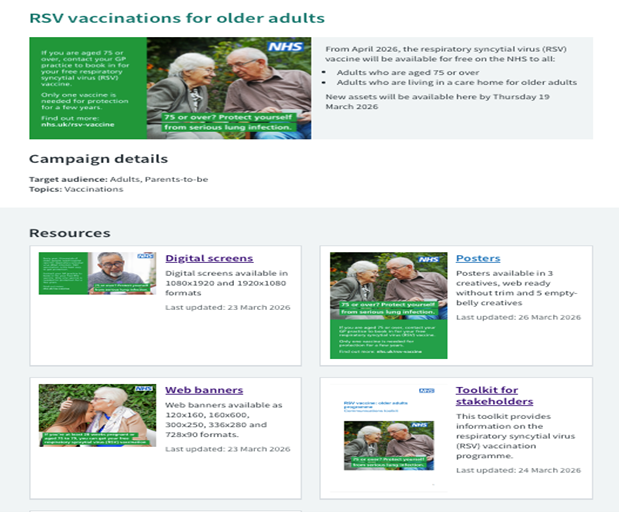
Resources to support the programme from https://www.gov.uk/guidance/find-public-health-resources
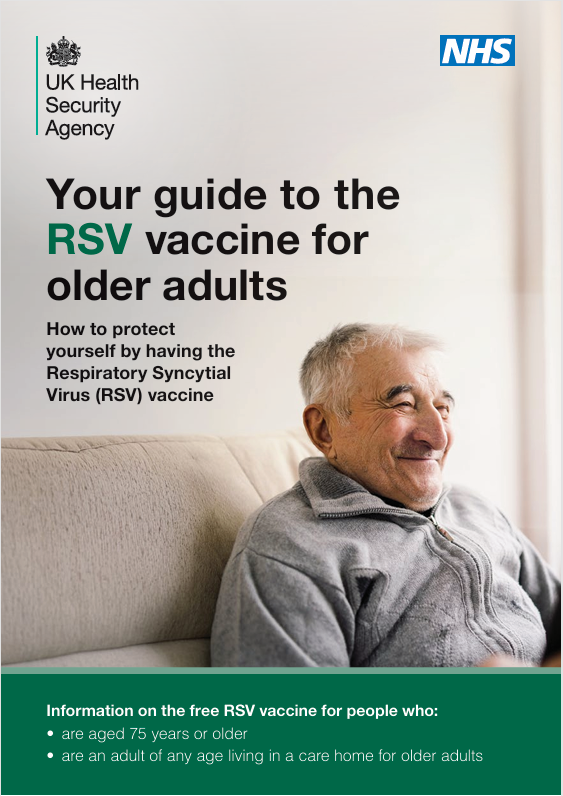
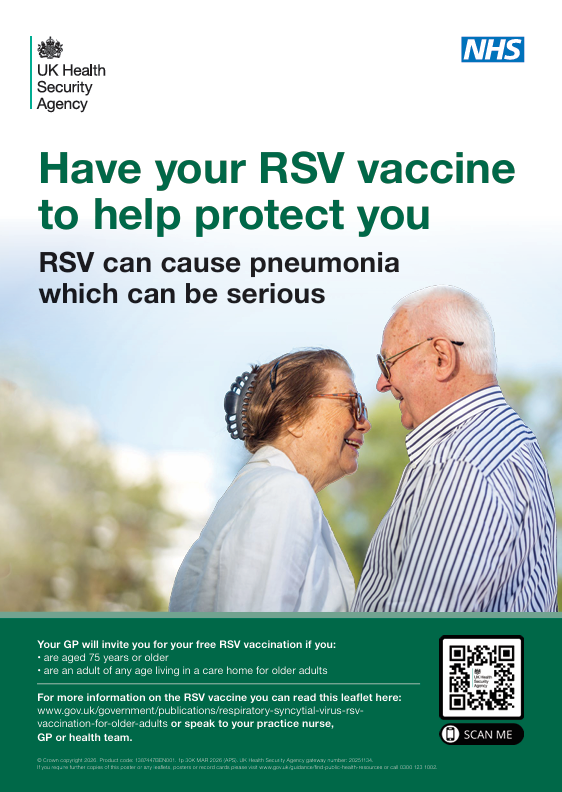
Healthcare professionals can register with the Department of Health and Social care campaign resources website to access support materials for use on digital display screens, web banners, and access useful toolkits . Register at https://campaignresources.dhsc.gov.uk/campaigns/
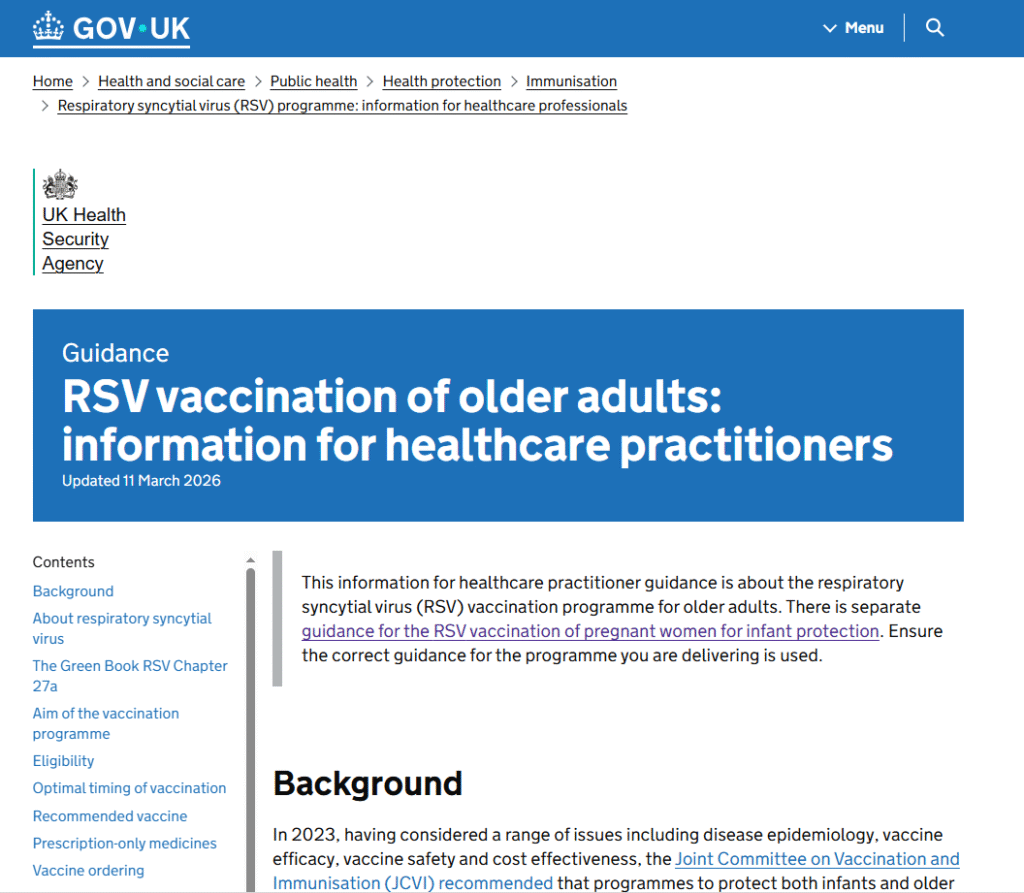
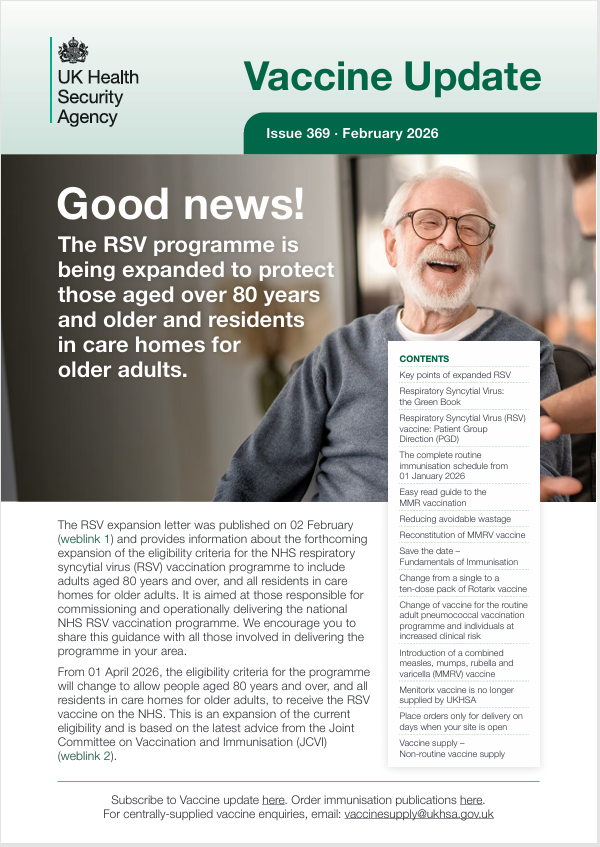
Information for HCPs delivering the RSV vaccine can be found on GOV.UK in the RSV – Information for Healthcare Practitioners document and February 2026 Vaccine Update edition.
Further information for patients and healthcare professionals can be found on the following websites:
Useful resource: NHS website
Oxford Vaccine Group – Vaccine Knowledge: RSV vaccine